Two apps can have the same number of screens and still require radically different budgets. The reason is usually what sits behind the interface: backend logic, permissions, payments, integrations and the tools needed to operate the product.
Two apps can have roughly the same number of screens and still require radically different development budgets.
One may be a straightforward mobile interface connected to an existing API. The other may need a custom backend, several user roles, payments, an administration platform, third-party integrations and rules for what happens when something fails.
From the outside, they can look equally simple.
That is why asking “How many screens does the app have?” tells you surprisingly little about what it will cost to build.
The interface is only the visible part of what you're paying for.
The short answer: how much does mobile app development cost in 2026?
There is no single reliable average price for a mobile app, and even large industry datasets produce very different numbers because they measure different kinds of projects.
Clutch's September 2026 pricing data says most mobile app projects reviewed on its platform fall between $10,000 and $49,999, while the average project in its dataset is approximately $90,780. Clutch also identifies scope, functionality, UX complexity and backend development as major factors affecting the final price.
GoodFirms takes a different approach. Its August 2026 research, based on input from 267 mobile app development companies across North America, Europe and Asia, gives these broad ranges:
| Project type | GoodFirms 2026 benchmark |
|---|---|
| Basic app | $15,000-$40,000 |
| Mid-level app | $40,000-$120,000 |
| Advanced app | $100,000-$250,000+ |
| Enterprise-level app | $250,000-$500,000+ |
GoodFirms defines the higher tiers by requirements such as multiple user roles, real-time functionality, advanced payments, several integrations, offline synchronization, enterprise systems and scalable infrastructure.
These figures are useful as market context, but they are not a Petadev price list, and they should not be treated as a quote.
The more useful question is why the range is so wide.
In our experience, the biggest differences are usually hidden behind the screens.
What does mobile app development cost at Petadev?
We don't price mobile apps from a fixed feature menu, and we don't estimate projects by screen count. We first look at what the product actually needs to do: the user roles, backend logic, integrations, payments, administration tools and what has to be included in the first release.
For planning purposes, our current project ranges typically look like this:
| Project type | Typical Petadev range |
|---|---|
| Small, focused projects | typically $10,000-$15,000 |
| Startup MVPs | typically $25,000-$35,000 |
| Most new custom mobile products | around $45,000-$80,000 |
| Larger, more complex platforms | around $100,000-$150,000+ |
These are not package prices. Two products in the same category can still require very different amounts of work depending on what sits behind the mobile interface.
How we price projects
For clearly defined projects, we usually provide a fixed project price upfront. If the agreed specification does not change during development, that is the price we commit to.
We also do not normally ask clients to pay a large deposit before seeing any work. The first milestone is typically reached after roughly two weeks, when the initial product framework is already in place and the client can review tangible progress. We then invoice completed milestones retrospectively, usually on a monthly basis.
This structure gives the client visibility into what has actually been delivered before each payment rather than requiring a large upfront commitment.
If the scope changes during development, we discuss the impact before the additional work is started rather than simply adding unexpected hours to an invoice.
What is included?
A typical project quote covers the parts required to launch the agreed product, including mobile development, backend development where required, production infrastructure setup, App Store and Google Play submission, and deployment.
If an administration platform is necessary for the first release, it is normally included in the overall project scope but shown separately in the estimate so the client can see what it costs.
UI and UX work depends on the project. Some clients already have a complete design system; others need full product and interface design. Many projects fall somewhere in between and only require a lighter design direction before development begins. We define that before pricing the project.
What happens after launch?
Our delivered code includes a two-year warranty for defects attributable to the original implementation.
That warranty does not cover changes outside the delivered software, for example, new Apple or Google requirements, operating-system changes, third-party API changes or new functionality requested after launch.
For ongoing development, we can set up a maintenance arrangement when it makes sense, but many of our clients prefer to continue with separately scoped improvements and releases. Those are typically priced in advance as new project phases rather than billed through an open-ended monthly development retainer.
Screen count is a poor predictor of development cost
Imagine two apps with 15 screens.
The first displays information from an existing backend, lets users update a profile and sends a few notifications.
The second has the same number of screens, but different users are allowed to see different data. Payments move through the system. Several external services need to stay synchronized. Internal staff need an admin platform. Some actions must work without a reliable internet connection.
Those are completely different software projects.
A new screen that follows an existing pattern can sometimes be relatively straightforward. A single feature that introduces a new permission model, transaction state or integration can affect the entire system.
That is why we rarely start estimating a project by counting screens.
We first want to understand what the system behind them has to do.
1. The backend can be more complex than the mobile app
For many business applications, the mobile interface is only one part of the product.
The backend may need to handle authentication, business rules, data storage, notifications, reporting, integrations, permissions, scheduled processes and communication between multiple parts of the system.
Consider a simple-looking action such as:
Approve request.
Before implementing it, the system may need to know who is allowed to approve it, whether it has already been changed by someone else, whether approval triggers a payment or notification, whether the action can be reversed and what should be recorded for administrators.
None of that complexity is visible in the button itself.
GoodFirms' 2026 research also places backend development among the largest development phases by budget share, specifically because it includes databases, APIs, authentication and system logic.
This is one reason two polished apps can have very different development costs even when their interfaces look similar.
2. More user roles add more than just more screens
A consumer app may have one main type of user.
A B2B platform might have employees, supervisors, account owners and system administrators, all using the same underlying data in different ways.
That changes more than the interface.
The backend has to decide who can see each piece of information, who can modify it, which actions require approval and what happens when someone changes roles or leaves an organization.
We've dealt with this extensively in Trinity Guard.
Guards working in the field, supervisors monitoring operations and administrators managing the wider platform have different responsibilities. The system therefore needs to understand those relationships rather than treating everyone as the same type of account.
The engineering effort grows because permissions need to stay correct across the product, not just on one screen.
This is also why adding B2B functionality to a system originally designed around individual users can become a structural change rather than a small feature.
3. Payments can be simple. The business rules around them often aren't.
Adding a standard payment provider does not automatically make a product financially simple.
If a customer pays your company once and receives a product or service, the flow may be relatively straightforward.
Subscriptions introduce another layer. The product needs to understand renewals, failed payments, cancellations, upgrades, downgrades and whether the customer should still have access.
Marketplaces go further because money may move between several parties.
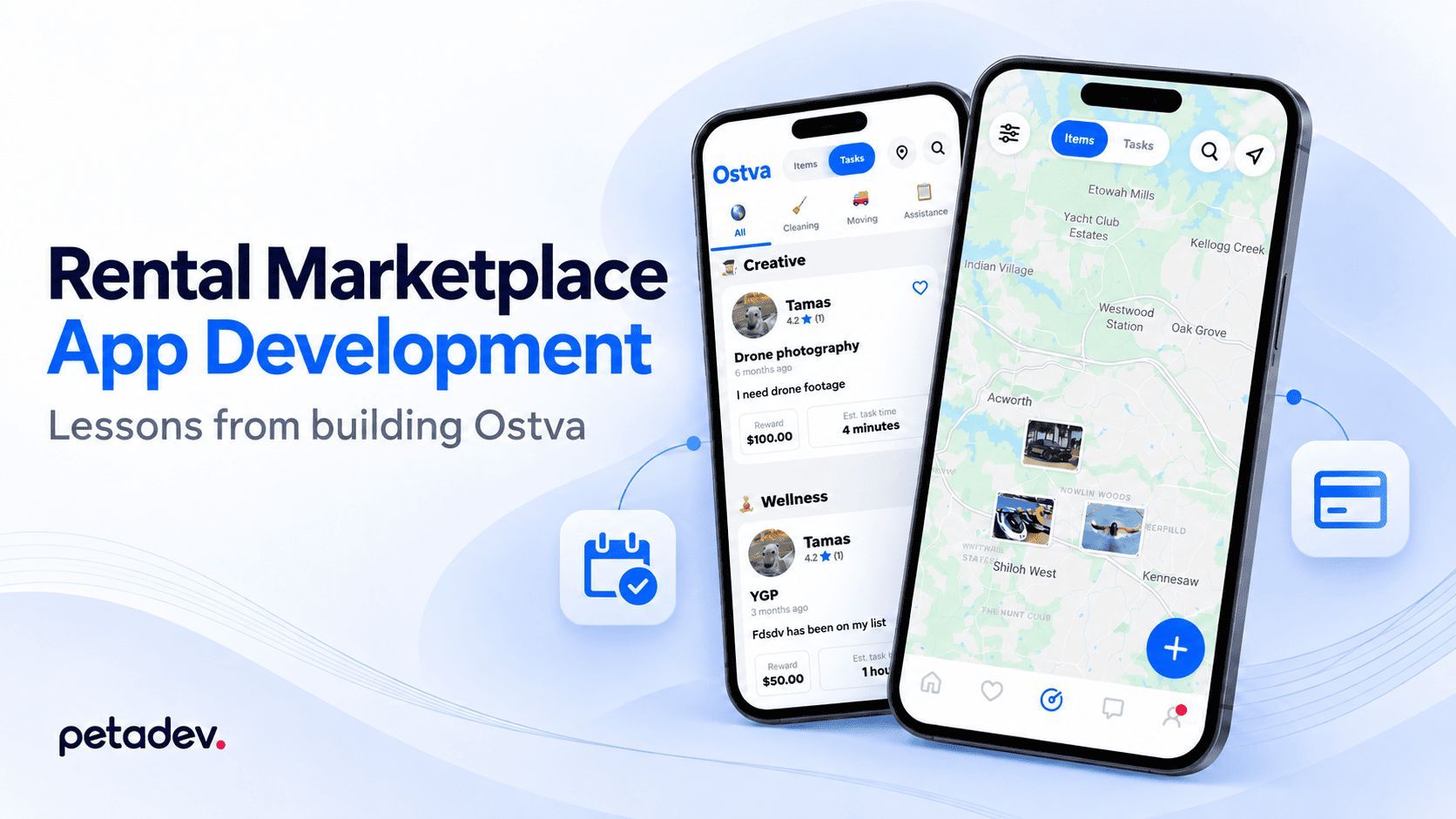
When we built Ostva, a U.S. peer-to-peer marketplace, the transaction model influenced identity verification, payments, payouts, user roles, transaction states and the tools needed to manage the platform.
From the customer's perspective, the action may still look like one Pay button.
The software behind it has to understand what that payment means before, during and after the transaction.
We explored this in more detail in Your Business Model Is a Technical Requirement: commercial decisions frequently become technical requirements long before anyone chooses a framework.
4. Integrations create uncertainty because you do not control both sides
An integration means your software has to communicate reliably with another system.
That might be a payment provider, ERP, CRM, identity service, mapping platform, inventory system or industry-specific API.
The technical work is not simply sending a request and receiving an answer. You also have to deal with authentication, inconsistent data, errors, rate limits, timeouts and changes made by the provider later.
Existing businesses make this particularly important.
We built the mobile app for Szerszámoutlet, one of Hungary's leading online tool retailers. The app was not an isolated greenfield product. It had to become another customer-facing channel for an e-commerce business that already had its own product and commercial processes.
That distinction matters.
When software is being added to an existing business, it usually cannot invent its rules from scratch. It has to fit into what already exists.
For this reason, integrations deserve much more attention during estimation than their single line in a feature list usually receives.
5. The admin platform is easy to forget because customers never see it
A mobile product usually has two sides.
There is the experience customers use.
Then there is everything the company needs in order to operate it.
Someone may need to approve accounts, change permissions, investigate a transaction, manage content, configure organizations, review activity or correct a mistake.
Those capabilities often require a separate web-based administration platform.
This is frequently underestimated because it does not appear in App Store screenshots. But if internal staff cannot operate the system without asking developers to change data manually, the product is not really finished from an operational perspective.
The more business rules a system has, the more important the administration side tends to become.
A marketplace needs different controls from an e-commerce product. A field-operations platform needs different controls from a consumer app. A B2B system may require organization and permission management that ordinary users never see.
None of that makes the mobile interface look more complicated.
It still affects the budget.
6. Real-world failure cases take time to build correctly
Most product specifications describe what happens when everything works.
Production software also needs to know what happens when it doesn't.
What if a payment succeeds but the next service does not respond?
What if two people try to change the same information at nearly the same time?
What if a user loses connectivity halfway through a workflow?
What if an administrator disables an account with unfinished work attached to it?
These cases are usually not difficult because of one particularly complicated algorithm. They are difficult because somebody has to decide what the correct outcome should be, and then the software has to enforce it consistently.
Trinity Guard is a useful example of how real-world operating conditions can create requirements that would be easy to miss on a list of screens. Its checkpoint system also had to account for attempts to scan photographs of QR checkpoints rather than the physical checkpoint itself. We eventually built a custom neural-network-based detection system trained on tens of thousands of images to help identify suspicious scan patterns.
That requirement came from how the product was actually used.
This kind of complexity is difficult to estimate accurately if discovery focuses only on the happy path.
7. Supporting several countries can change the product itself
Internationalization is often discussed as a translation cost.
Sometimes it is.
Sometimes the country or region changes how the software is supposed to behave.
A good example is a technical product selector we built for Dunamenti, a fire-protection company. The selected region affects both which products can be used and which standards apply. The same technical input can therefore produce a different correct result depending on the market.
That is not simply localization.
It is business logic.
Other international products may also need to deal with currencies, time zones, regional payment methods, local configuration or infrastructure decisions.
If those requirements are expected from the beginning, they can be incorporated into the architecture deliberately. Adding them to a system built around one country and one set of assumptions can require much deeper changes.
8. Native vs. cross-platform affects cost, but it is not the whole equation
Choosing between separate native applications and a shared cross-platform codebase can change the amount of client-side work.
But this is often oversimplified.
A cross-platform approach can allow substantial parts of the iOS and Android applications to share code. What it does not automatically eliminate is the backend, administration platform, payment logic, integrations, business rules or infrastructure behind the mobile clients.
That means the technology choice matters, but its effect depends on where the project's complexity actually sits.
For a product whose main challenge is the mobile interface, platform strategy may have a major impact on cost.
For a product whose difficult parts are transaction logic, integrations and backend workflows, the difference may represent a much smaller share of the overall project.
We cover that decision separately in Native vs. Cross-Platform App Development: How to Decide.
What makes an app expensive and what usually matters less than people expect?
A useful way to think about budgeting is to separate visible scope from structural complexity.
| Often has a major impact on cost | Usually tells you less on its own |
|---|---|
| Custom backend and business logic | Number of screens |
| Multiple roles and permissions | Number of navigation tabs |
| Subscriptions, payouts or marketplace transactions | Basic payment form |
| Third-party and legacy-system integrations | Visual polish alone |
| Administration and internal workflows | App icon or branding |
| Offline behavior and synchronization | Static informational content |
| Real-time functionality | Choice of fashionable framework |
| Regional business rules | Number of supported languages alone |
This does not mean design or screen count are free.
It means they are rarely enough to explain why two estimates differ dramatically.
How to get a useful app development estimate
A good estimate needs more than a feature list.
Before expecting a development company to give you a meaningful number, it should understand who the users are, what each type of user can do, how the business makes money, what existing systems the product must work with, what needs to happen on the administration side and which requirements are truly necessary for the first release.
You do not need to solve every technical decision before asking for an estimate.
That is partly what discovery is for.
But unresolved structural questions create uncertainty, and uncertainty either appears in the price or returns later as a scope change.
This is why two companies can read the same specification and return very different numbers. Sometimes one is genuinely more expensive. Sometimes they have simply priced two different interpretations of the project.
Before comparing totals, compare what is actually included.
Our guide to evaluating a mobile app development company before you hire one goes into more detail on how to compare teams, proposals and responsibility boundaries.
A cheaper quote and a smaller scope can look identical on paper
When one proposal is dramatically cheaper than another, it is tempting to assume that one company is simply more efficient.
That is possible.
But first check whether both estimates include the same work.
Does the quote include the backend? Administration tools? Design? QA? Deployment? App Store and Google Play release work? Infrastructure setup? Third-party integrations?
And, just as importantly, has the development team asked enough questions to know what those things actually require?
A fixed number is only useful when the scope behind it is reasonably well understood.
If a team can price a complex product after a short conversation without asking about payments, user roles, integrations or internal operations, the apparent certainty may be misleading.
So what should you budget?
Published 2026 data gives a very broad answer because mobile apps themselves are a very broad category.
Clutch reports that most reviewed projects on its platform fall in the $10,000-$49,999 range, while its average project is roughly $90,780. GoodFirms' global 2026 study puts basic apps at approximately $15,000-$40,000, mid-level products at $40,000-$120,000, advanced products at $100,000-$250,000+, and enterprise-level systems at $250,000-$500,000+.
Those numbers are not contradictory.
They are a reminder that “mobile app” describes an interface, not a scope.
The budget depends on what has to exist behind that interface.
If you want a useful estimate, start there.
Trying to work out what your app should realistically cost?
Tell us what the product needs to do, who will use it and what systems it needs to work with. We'll help separate the requirements that shape the architecture from the features that can safely wait for a later version.